
A nationwide opinion and awareness campaign on early detection of ovarian cancer, resulting in extensive media coverage and strong public impact, generating 42 media articles and broadcast features and reaching just over 2 million readers and viewers.
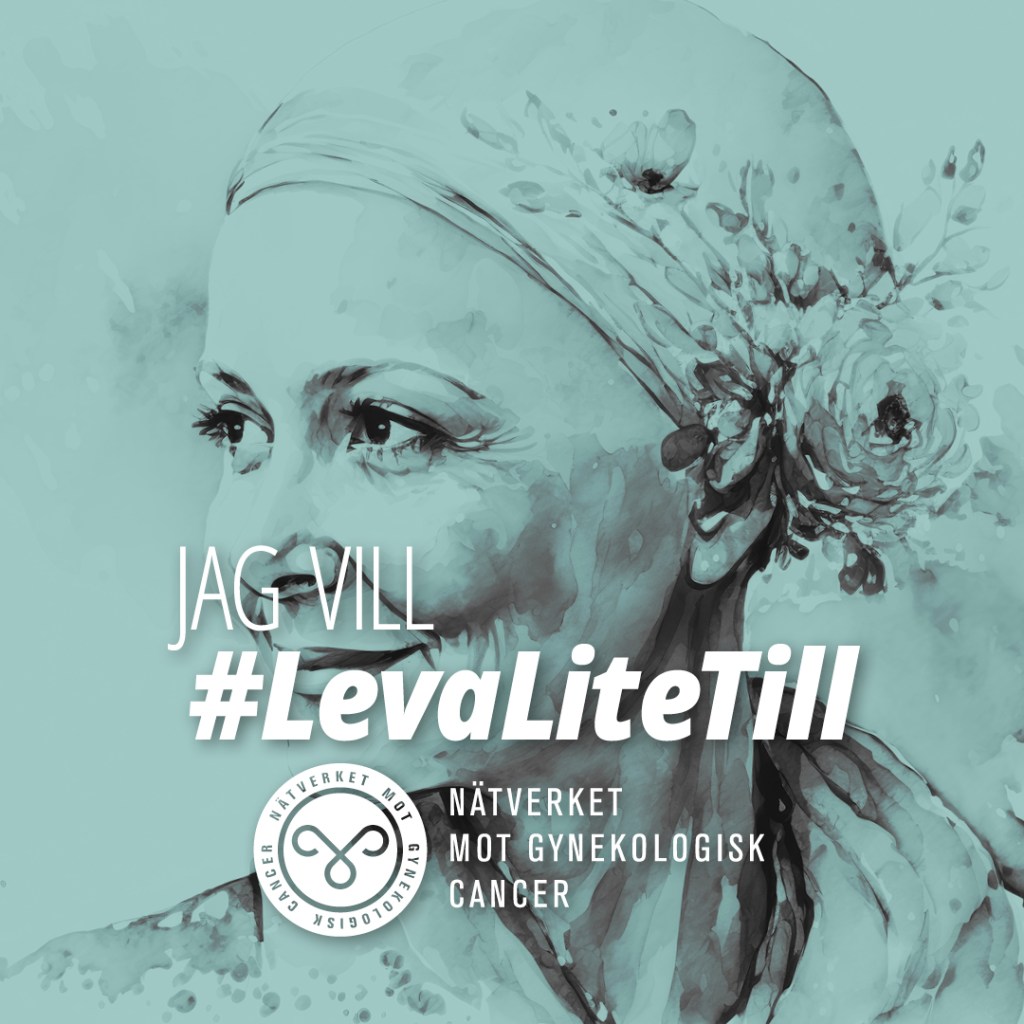
Background
Strategic PR and publicity work for The Network Against Gynaecological Cancer, supporting several of the network’s focus teams over time. The assignment has included project management and media relations for the network’s annual seminar Gynaecological Cancer Day (Gyncancerdagen) between 2012 and 2019, hosted at Södra Teatern and Oscarsteatern in Stockholm, as well as communications activities during Almedalen’s political week in Visby.
Since 2020, the work has primarily focused on opinion-building initiatives, op-eds and ongoing media relations related to women’s health and cancer care. Key issues have included ovarian cancer, HPV vaccination, hereditary cancer risks and palliative care, with a strong emphasis on increasing public awareness and contributing to public debate.
Case: Early Detection of Ovarian Cancer – Nationwide Opinion Campaign
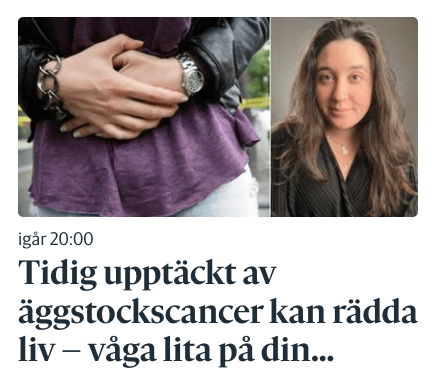
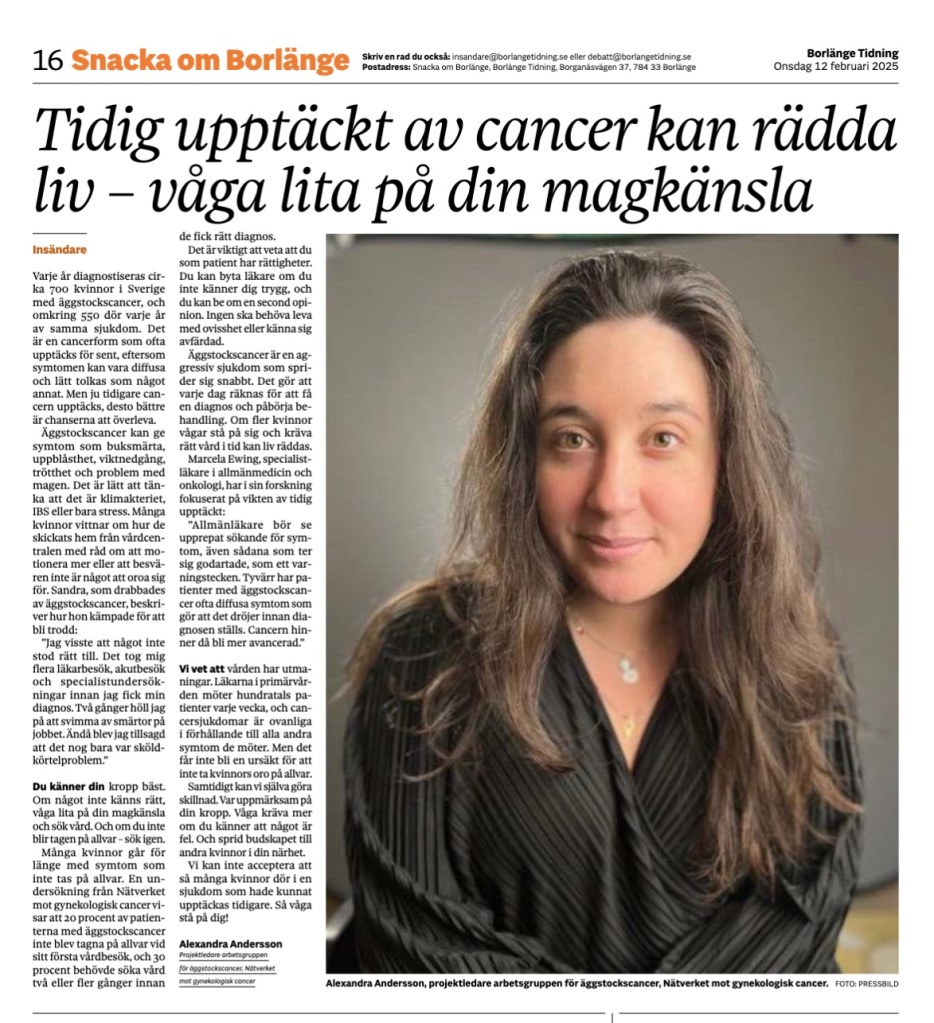
This case is based on an independent opinion-building and awareness campaign highlighting the importance of early detection of ovarian cancer. The core activity was the development and placement of an op-ed authored by a representative of the ovarian cancer focus team within the Network Against Gynaecological Cancer.
The article was published in approximately 40 local newspapers across Sweden, generating extensive nationwide coverage. In addition, the spokesperson participated in an interview on TV4’s national morning programme, further amplifying the campaign’s reach.
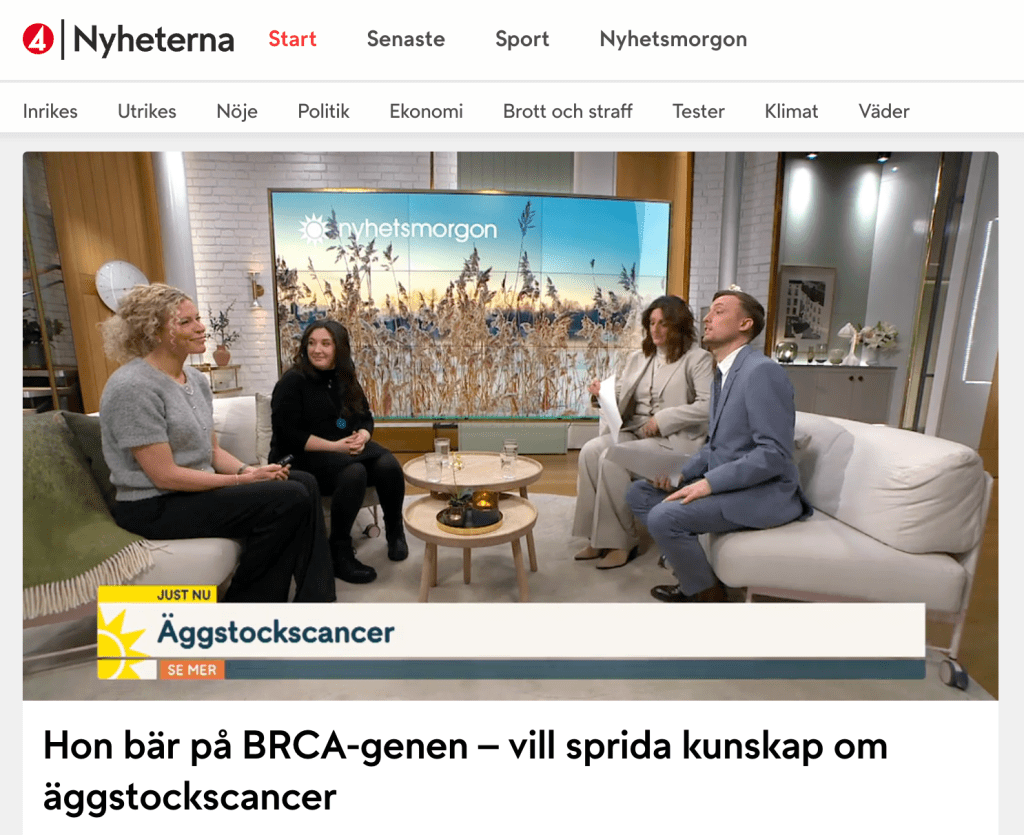
In total, the initiative resulted in 42 media articles and broadcast features across print and digital outlets, reaching just over 2 million readers and viewers. The communication centred on two key messages:
“Early detection saves lives” and
“Many women live too long with symptoms of ovarian cancer that are not taken seriously – trust your intuition.”
The communications effort included editorial development of the op-ed in close collaboration with the patient organisation and medical experts, strategic placement on opinion pages in local media nationwide, and coordination of broadcast media participation. The campaign was conducted as a standalone opinion and knowledge initiative, independent of the annual Gynaecological Cancer Day.
The work
- Strategic development of op-ed
- Media relations and nationwide placement
- Coordination with medical experts and patient representatives
- Broadcast media coordination
The result
- 42 media articles and broadcast features
- Coverage across print, digital and national television
- Reach of just over 2 million readers and viewers
- Nationwide visibility in both local and national media
- Clear and consistent delivery of the campaign’s core messages
 C-BYRÅN